The people who model fusion are the heroes. The plumbing is the villain.
A first-of-a-kind machine takes a dozen realms of physics, codes from every decade, and teams who rarely share a language — literally. The physicists and engineers who make that work are extraordinary. What they spend most of their week on is not.
Where Morton Labs started and where the platform runs today. Plasma, neutronics, tritium, heat, structure — each its own department, its own codes, its own decades of hard-won validation. None of it was built to talk to the rest.
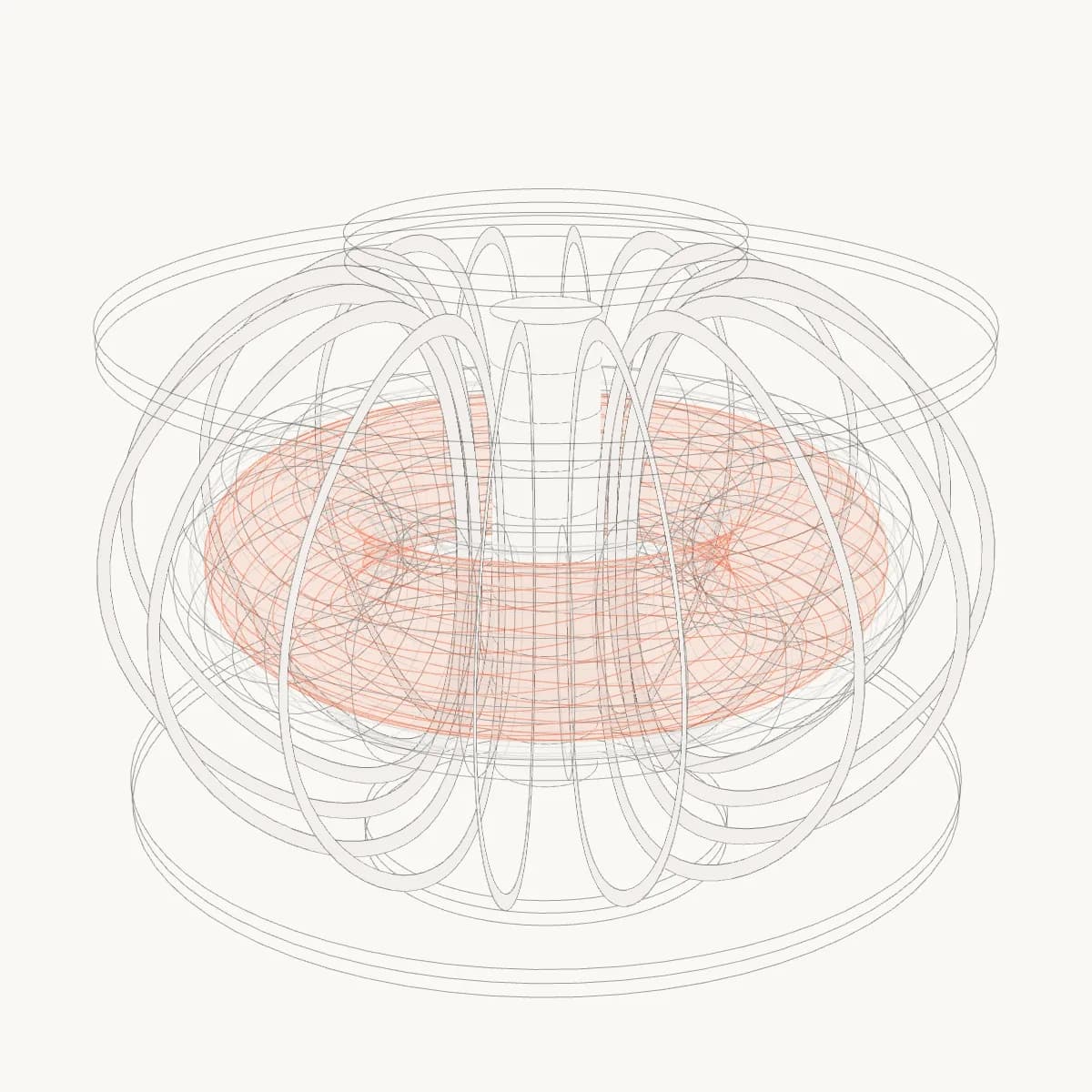
One question about one component pulls on every thread.
Each reactor design is built from millions of components. Each component's behavior in an extreme environment is its own realm of physics, with its own codes, built and maintained by different institutions, in different languages, leaving results scattered across scratch disks and archives. The highlighted thread is one question about one component.
More complex systems are harder to simulate.
Combine large datasets across multiple realms of physics, with modeling tools written in a variety of languages, and you have a systems engineering nightmare. It doesn't defeat your scientists. It taxes them — a little of every day.
AI doesn't solve this. It multiplies it.
Frontier models and agents are very good at generating: more candidate designs, more runs, more surrogates, more results. Every one of them still has to be managed, integrated into the design, and validated before anyone will trust it. AI provides the brain. It does not provide the nervous system.
The engineering control plane.
Intelligence sits above. Physics codes, experimental data, and the hardware itself sit below. Morton Labs is the layer between: it securely connects, orchestrates, and validates the simulation capabilities your teams already trust, and keeps the record that turns results into decisions.
AI provides the brain. Morton Labs is the nervous system.
- More intelligence — more runs, designs and surrogates to coordinate.
- More complexity — more results to keep consistent with each other.
- More critical decisions — a higher bar for what anyone will trust.
Your people keep their tools. Morton Labs keeps them coordinated.
Plasma, neutronics, thermal-hydraulics, structural, tritium — each department keeps the codes it knows and trusts. Morton Labs is the harness that runs them as one workflow, the orchestration that executes campaigns on laptop, cluster, or cloud, and the system of record that makes every result traceable. Agents run the campaigns. People make the calls.
The platform is in beta with first users. We work with leading fusion companies and U.S. national laboratories, connecting the codes they already trust into orchestrated, versioned workflows.